START WITH THE SYSTEM
Friction Analysis Audit.
When a problem is recurring, cross-functional, or difficult to define, the first need is not a larger solution. It is a clearer picture. The WBI Friction Analysis Audit is a focused consulting diagnostic designed to identify where people, process, information, structure, technology, and decisions are working against the intended outcome.
Request a Friction Analysis
Signals that an audit may help
A human-led consulting conversation starts with the operating signals leaders and teams are already seeing:
Work repeatedly stalls between teams or roles.
The same issue returns after being “fixed.”
Growth is increasing rework, delay, or confusion.
A major decision lacks sufficient structure or evidence.
Leadership has competing explanations for the problem.
Important work depends too heavily on one person.
The organization is adding tools without improving flow.
Signal to Understanding
Different signals. One discipline: observe, interpret, verify.
What WBI examines
The conversation traces the system around the stated issue rather than treating a surface symptom as the whole problem.
The stated problem
What is happening, who experiences it, and which outcome is at risk?
The operating system
How people, process, information, structure, technology, and decisions interact around the problem.
The friction points
Where capacity, time, trust, money, or decision quality is being lost.
The dependency chain
What must be true before the next action can succeed?
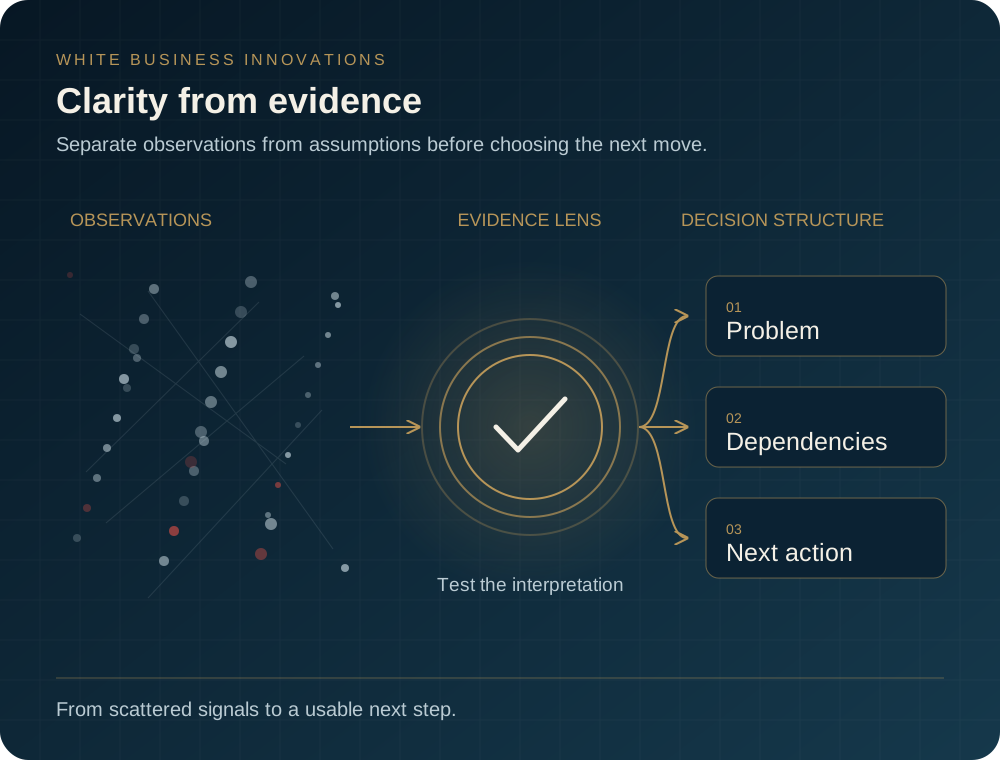
Clarity from Evidence
Separate observations from assumptions before choosing the next move.
Potential outputs
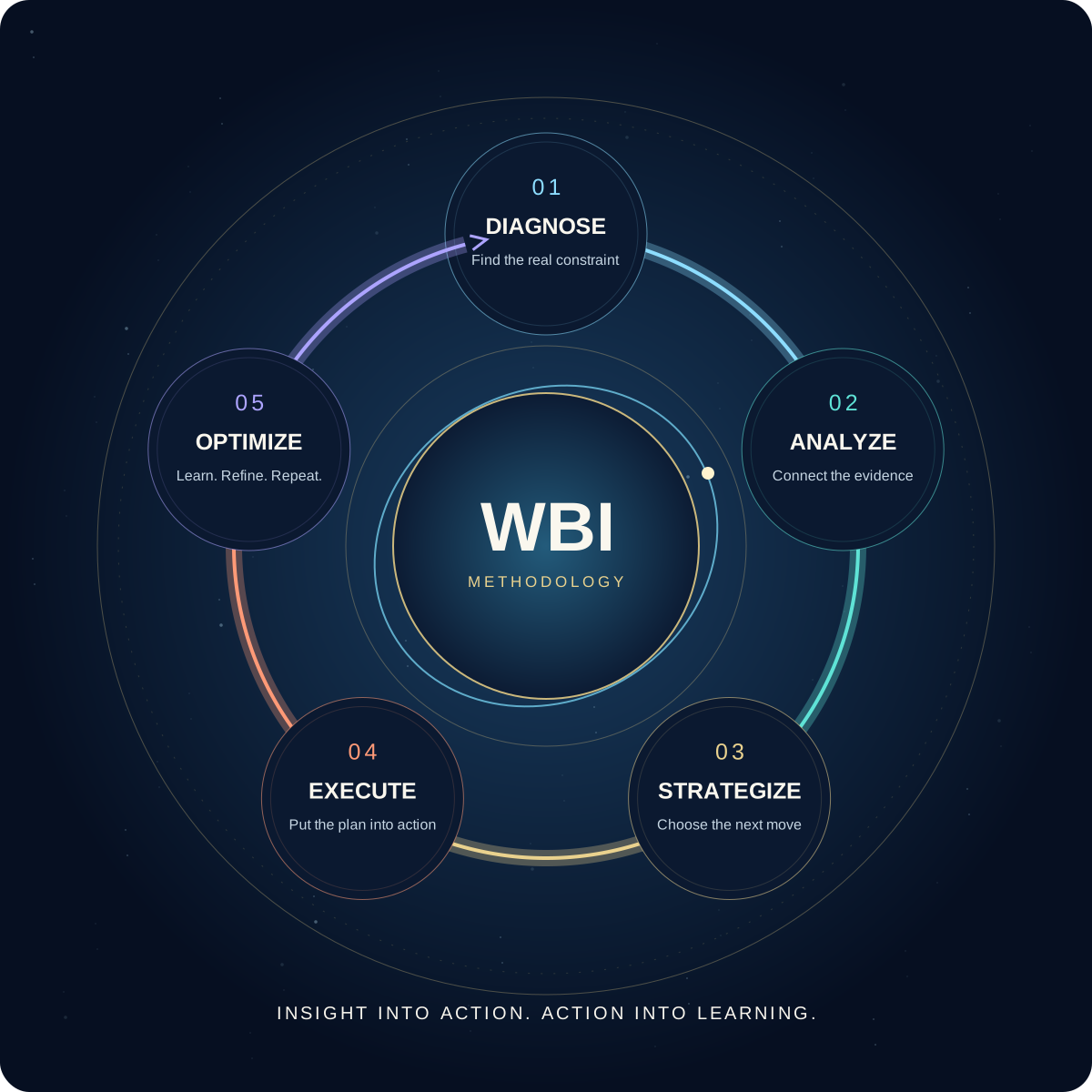
Scope and deliverables are agreed before engagement. Depending on the agreed work, potential outputs may include a concise problem definition, a visual friction map, evidence and assumption separation, priority findings and dependencies, decision points, recommended next actions, and a practical path for deeper work.
What this is—and is not
This is a management and operations diagnostic. It is not a financial statement audit, legal opinion, tax service, cybersecurity assessment, or guarantee of funding or business performance. When a matter requires a licensed or specialized professional, WBI will identify that dependency.
Tell us what is happening, what outcome matters, and what has already been tried.
Begin the Diagnostic